








What People Here Ring About
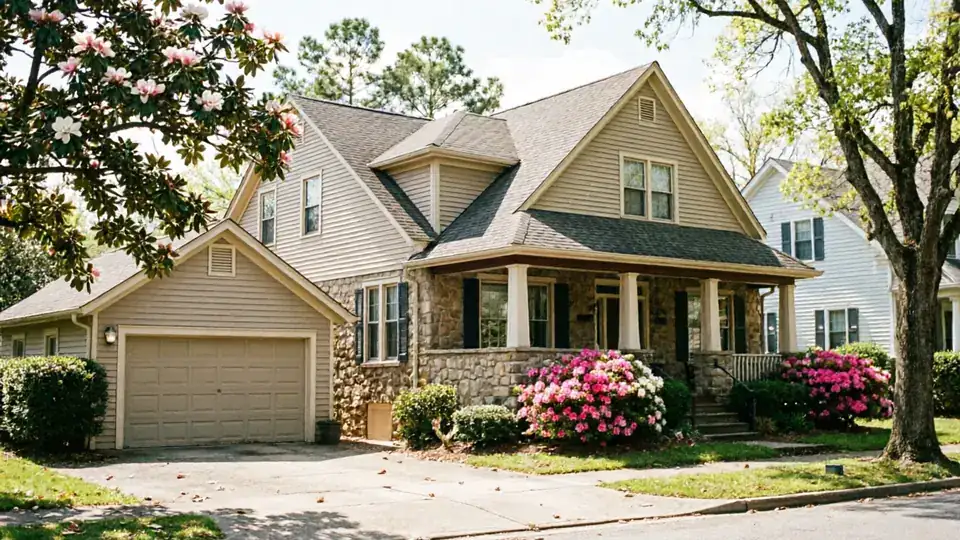
The calls we get from Midway lean toward hardware that's simply aged out. Extension springs stretch and lose tension years before anyone notices, so the door feels heavy on one side before it ever fully breaks. Steel panels from this era rust through at the bottom corners faster than newer coated steel, especially where a door sits low to grade. Openers get added decades after the original door went in, and the bracket or header they're mounted to wasn't built with a modern opener's pull in mind - that shows up as a popped bracket or a door that reverses on its own. At $59,609 median household income, most of these calls are repair calls, not full replacements - people want the door that's been there fixed, not swapped for something it was never designed to match.
What the Housing Means for Your Door
Older extension-spring doors need a different repair approach than torsion setups. The pulleys and safety cables wear on a different schedule, and a lot of these doors were never retrofitted with the safety cable at all - something worth checking regardless of why you called. The climate here is classed as cold and severe, so an older door with thin panels and no foam-backed insulation loses more heat through the door than a newer R-value rated panel would. That's not a reason to replace a door that still runs fine, but it's worth knowing before you decide what a repair is actually buying you. We drive the 11 miles out from Georgetown for calls here, so we don't keep a stock of every obsolete bracket or hinge style on hand - if your door takes a part that stopped being made, we tell you that up front and talk through what fits instead.









