
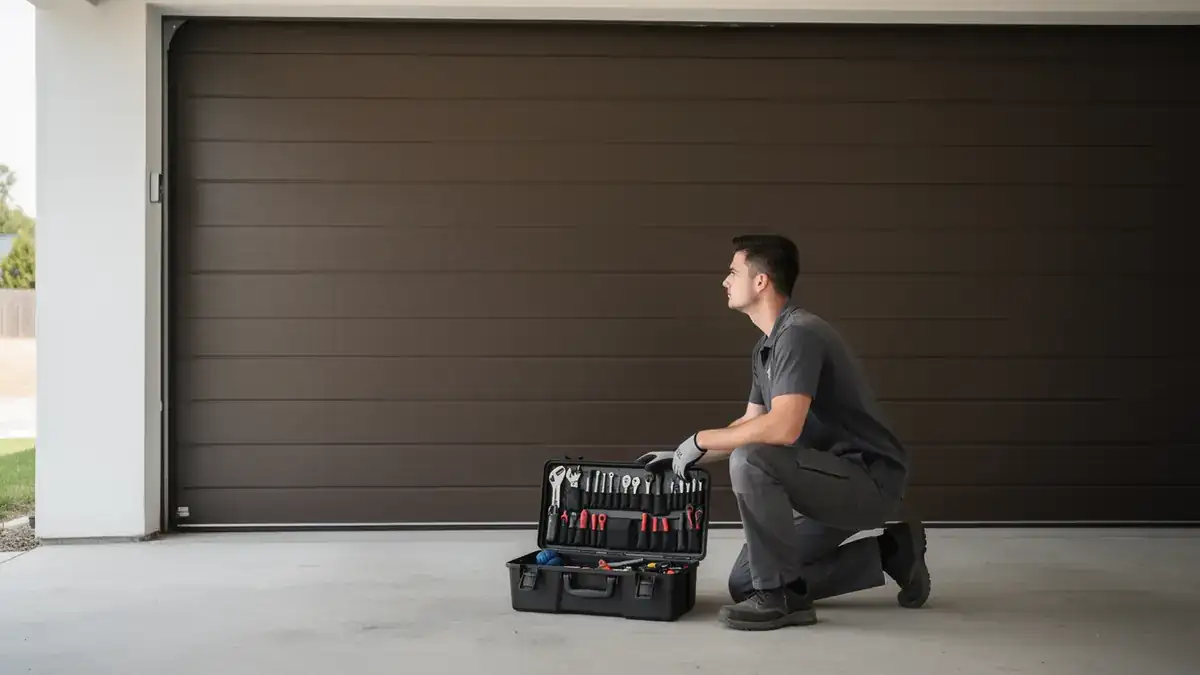
The Problem
Most calls start the same way: a door that worked fine yesterday and won't move right today. On the housing stock common across Georgetown's older sections - 1960s and 70s builds concentrated in six areas of town - the usual culprits are age-related. Torsion springs rated for a certain cycle count finally give out. Steel rollers wear grooves into tracks that were never aligned quite right to begin with. Openers from that era, or even the first replacement generation after them, run on chains and gears that don't hold up forever. None of this is a mystery, but it does mean the fix usually isn't a five-minute tightening job. It's diagnosing which part gave out first and whether the rest of the system around it is still sound enough to keep running, or whether one failure is about to take the next part with it.
How Local Conditions Play In
Georgetown sits in a cold-climate band with real seasonal swings, and that matters more for a garage door than most people think. Steel contracts in hard cold, which tightens tolerances on tracks and hinges that were already loose from decades of use. Lubricant that worked fine in August gums up or thins out in January. On doors from the 1956-1979 era especially, the metal and the hardware have had a long run of expansion and contraction cycles, and that fatigue shows up as noise, binding, or a spring that finally snaps on the coldest morning of the year - which is also the worst possible time for it to happen. We see more spring failures and opener strain in the cold months than any other time, and it's rarely a coincidence tied to the house's age.











