
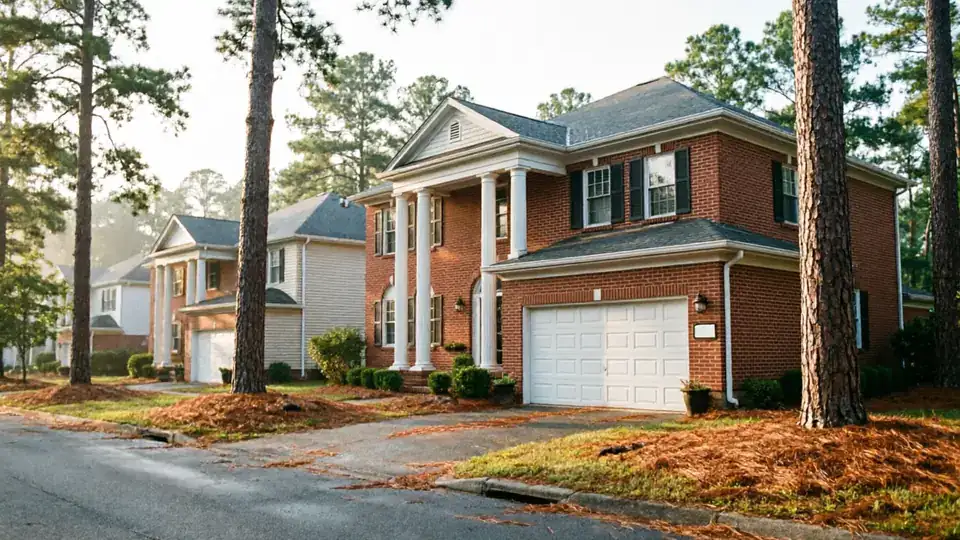








What People Here Ring About
The calls we get from Stamping Ground lean toward torsion springs that have simply outlived their cycle count, and openers with chain-drive motors that are the originals or close to it - both typical failure points for mid-1970s installs that haven't been upgraded. Cold-weather callouts are common too. This area sits in a cold-severe climate band, and older torsion springs lose tension and snap more often in sub-freezing weather, especially on doors that haven't been serviced in years. We also see a fair number of rollers and track sections that have simply worn out from decades of use rather than any one failure. With median household income here around $60,000, most homeowners we talk to want an honest repair-versus-replace call, not an upsell, and that's exactly how we price the job once we've seen it.
What the Housing Means for Your Door
Because so much of the housing stock here dates to the same period, the hardware patterns repeat house to house. A lot of these garages were built with single torsion springs rated for the standard door weights of that era, which were often fine in 1974 but undersized for a heavier insulated door if someone swapped the panel later without upgrading the spring. We also see older extension-spring setups on some of the 1960s holdovers in the wider area, which need safety cables that a lot of these never got. If your door is original to the house, the opener is very likely a chain-drive unit with a mechanical limit switch rather than today's digital setups - parts for those can be slower to source, which affects how fast we can finish a repair versus a straight swap to new equipment.









