
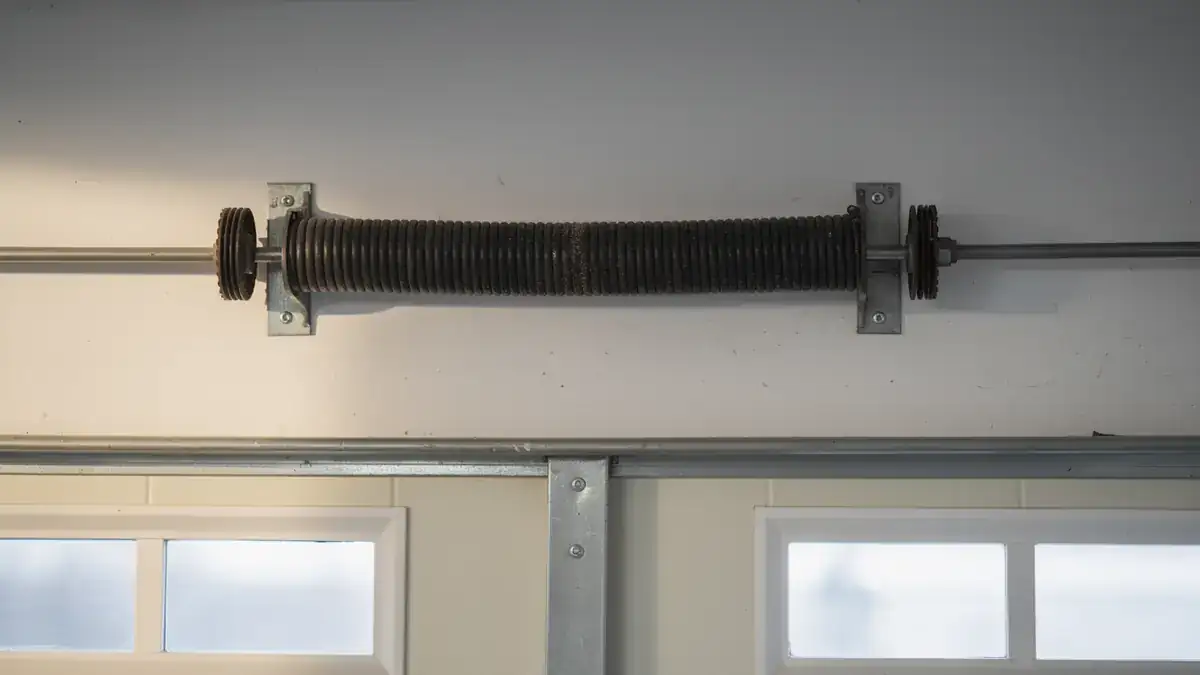
The Problem
Torsion springs are rated for a number of open-close cycles, and once a spring built decades ago gets near the end of that count, it doesn't weaken gradually - it goes at once, usually mid-lift, with a bang you can hear from the kitchen. In a house from the 1956-1979 stock that makes up most of this area, that spring has had a long run already. Add a winter morning where the metal has gone stiff with cold and you've got the two things that actually break springs working against each other at the same time: age and temperature. We see it most on doors that haven't been touched since they were installed - no lubrication, same spring, same cable, same everything. The cable itself is often the second casualty, not the first: once the spring lets go, the door can drop hard enough to kink or fray the cable on its way down, which turns a one-part fix into a two-part fix. None of this means your door is unusual. It means it's the age it is, doing what springs that age do.
How Local Conditions Play In
This area sits in a climate band classed COLD severe, and that matters more for garage doors than people expect. Steel contracts in the cold, torsion springs lose a little flexibility, and the lift that a spring could manage in September gets harder to deliver in January - right when a fatigued spring is closest to its limit anyway. On a door that's already carrying extra weight because it's from the 1960s or 70s build-out common across the six named areas we work in, that combination shows up as the 6 a.m. call: door won't budge, or it came down hard and won't go back up. With 8,359 owner-occupied houses across the service area and a median household income of $56,636, we know most people here aren't looking to replace a whole door on a whim - they want the thing that's actually broken fixed, not a sales pitch for a new unit. So we check the spring, the cable, and the hardware age before we talk about anything bigger, and if the door itself is sound, we say so.











